
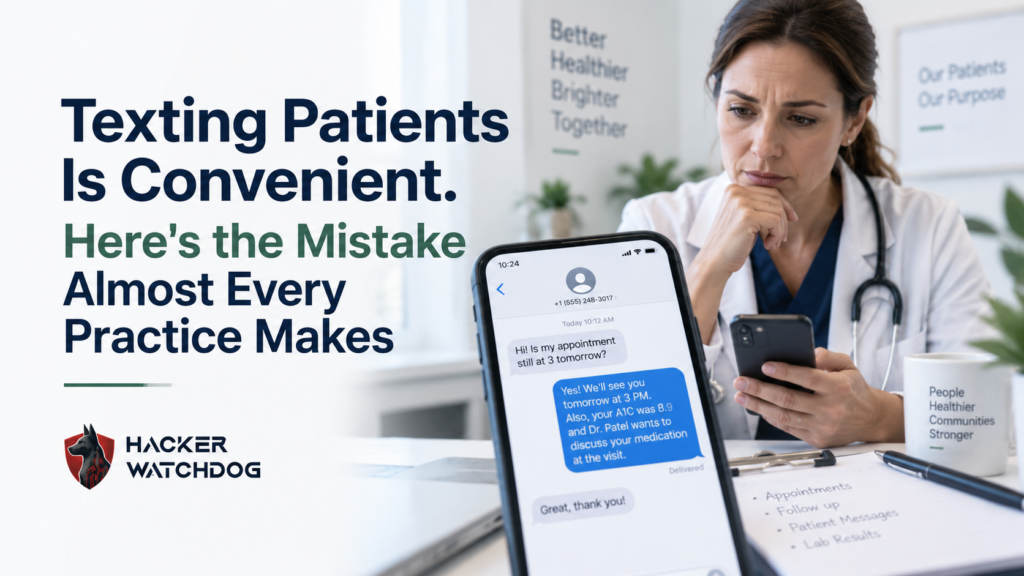
Texting Patients Is Convenient. Here's the Mistake Almost Every Practice Makes
HIPAA-compliant texting is one of those things most healthcare practices assume they’re doing right until they take a closer look.
Texting patients is fast, easy, and often preferred over phone calls. Appointment reminders, scheduling updates, prescription notifications, and follow-up instructions all move more efficiently through text messages. For busy clinics and small medical practices, it can feel like the perfect communication channel.
But there’s one surprisingly common problem that shows up everywhere: staff members texting patients from their personal phones.
Not because they’re careless. Usually it’s because they’re trying to be helpful.
The issue is that this convenience creates a quiet compliance gap many practices don’t realize they have.
What's the biggest texting mistake healthcare practices make?
Many staff members send appointment reminders or patient-related information from personal phones using standard texting apps. That creates risks around patient privacy, message retention, device security, and HIPAA compliance.
The simple fix is implementing a HIPAA-compliant texting platform that allows staff to communicate securely without using personal devices or consumer messaging apps.
Why Personal Phone Texting Happens So Often
In small and growing practices, technology decisions are often driven by convenience.
A front desk employee misses a patient by phone and sends a quick text.
A medical assistant follows up about an appointment change.
A staff member working remotely responds from their personal device because it’s faster.
None of these actions feel risky in the moment. In fact, they’re usually done with good intentions and a focus on patient service.
The problem is that healthcare compliance isn’t only about intent. It’s also about how patient information is handled, stored, protected, and accessed.
That’s where personal texting starts creating challenges.
The Hidden Risks of Non-HIPAA-Compliant Texting
Most consumer texting applications were never designed for healthcare compliance.
When patient communications happen through personal devices, several risks appear:
Loss or Theft of Personal Devices
If an employee loses their phone, patient conversations may be exposed.
Even when phones are password-protected, practices often have limited visibility into what information was stored on the device and whether it can be remotely removed.
Lack of Message Control
Standard text messages are difficult for organizations to manage.
Practice administrators typically can’t:
- Archive conversations
- Monitor communications
- Control data retention
- Remove messages when employees leave
That means patient-related information can remain on personal devices indefinitely.
Unintentional Disclosure
Personal phones are shared more often than people realize.
A notification might appear on a lock screen. Family members may see incoming messages. Backup services can store data automatically.
Each situation increases the likelihood of an unauthorized disclosure.
Limited Audit Trails
If a patient’s communication history needs to be reviewed, personal text messages can create gaps.
Without centralized records, practices may struggle to demonstrate appropriate handling of patient information.
Why Appointment Reminders Aren't Always Risk-Free
One of the biggest misconceptions is that appointment reminders are automatically safe because they seem harmless.
Sometimes they are.
But context matters.
A reminder that identifies a healthcare provider, treatment type, medical condition, or patient information may carry compliance implications depending on the content.
The challenge is that staff members often make judgment calls in real time.
Over hundreds of daily interactions, the risk grows.
That’s why relying on individual discretion is less effective than providing a secure system that guides staff toward compliant communication by default.
How HIPAA-Compliant Texting Solves the Problem
The good news is that fixing this issue doesn’t require a massive technology overhaul.
Many healthcare organizations successfully address the risk by implementing a secure messaging platform designed specifically for healthcare environments.
A good HIPAA-compliant texting solution typically provides:
- Secure messaging channels
- Centralized communication management
- Access controls
- Message retention policies
- User authentication
- Device management capabilities
- Employee offboarding controls
- Reporting and audit visibility
Most importantly, it removes the need for staff to use personal texting apps for patient communications.
The workflow remains convenient while significantly reducing compliance risk.
The Low-Friction Fix Small Practices Actually Adopt
The most successful changes are usually the simplest ones.
Rather than introducing complicated procedures, practices can:
- Assess how staff currently communicate with patients.
- Identify where personal devices are being used.
- Establish approved communication channels.
- Deploy a secure patient messaging solution.
- Train employees on when and how to use it.
- Periodically review communication practices.
This approach doesn’t slow anyone down.
In many cases, staff members prefer it because they no longer have work-related patient conversations mixed with personal messages.
That’s a win for compliance and for employee boundaries.
Make Compliance Easier, Not Harder
Healthcare teams already have enough on their plates.
The goal isn’t to make communication more difficult. It’s to make secure communication the easiest option available.
When staff members text from personal phones, they’re usually trying to provide better service. Unfortunately, that convenience can introduce privacy and compliance risks that many practices don’t notice until an audit, complaint, or security incident occurs.
The good news is that the solution is straightforward.
By adopting HIPAA-compliant texting, practices can continue offering the convenience patients want while reducing risk for both staff and the organization.
Small changes often prevent much bigger problems later.
Final Thoughts
Healthcare teams already have enough on their plates.
The goal isn’t to make communication more difficult. It’s to make secure communication the easiest option available.
When staff members text from personal phones, they’re usually trying to provide better service. Unfortunately, that convenience can introduce privacy and compliance risks that many practices don’t notice until an audit, complaint, or security incident occurs.
The good news is that the solution is straightforward.
By adopting HIPAA-compliant texting, practices can continue offering the convenience patients want while reducing risk for both staff and the organization.
Small changes often prevent much bigger problems later.
Want a quick way to identify hidden communication risks in your healthcare practice?
Request a Compliance Snapshot from Hacker Watchdog and uncover potential gaps in patient communication, device usage, and security practices before they become costly compliance issues.
Frequently Asked Questions
What is HIPAA-compliant texting?
HIPAA-compliant texting refers to secure messaging systems designed to protect patient information through safeguards such as access controls, secure data handling, monitoring, and communication management features.
Can healthcare staff text patients from personal phones?
While the answer depends on the organization’s policies and controls, personal phone texting often creates compliance and privacy challenges that healthcare practices should carefully evaluate.
Are appointment reminders considered protected health information?
Certain appointment reminders may contain information that could identify a patient or reveal healthcare-related details. The compliance impact depends on the content being shared.
What's the simplest way to improve texting compliance?
Implementing a dedicated HIPAA-compliant texting platform and providing clear communication policies is often the most practical and effective first step.
Do patients prefer texting?
Many patients appreciate texting because it is convenient, fast, and less disruptive than phone calls. The challenge is ensuring that convenience does not come at the expense of privacy and security.
Contact Us
This site is protected by reCAPTCHA and the Google Privacy Policy and Terms of Service apply.